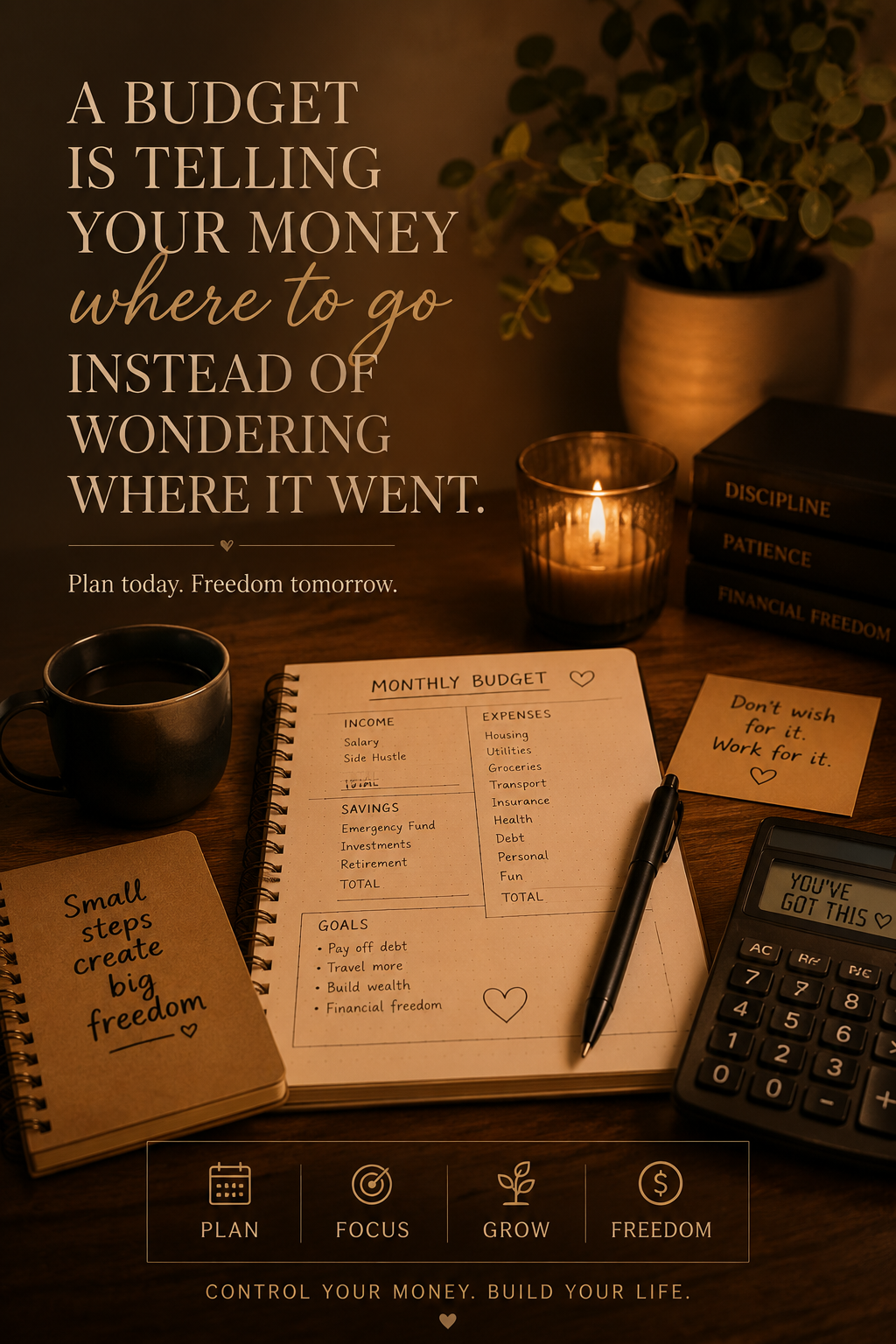
How to Create a Simple Budget That Actually Works (Even If You Hate Budgeting)
If the word budget makes you feel stressed, restricted, or overwhelmed—you’re not alone.
For a lot of people, budgeting feels like punishment. It can seem like a long list of things you can’t do instead of a tool that helps you build the life you actually want.
But here’s the truth: a budget isn’t meant to control you. It’s meant to support you.
And the best budgets? They’re simple, flexible, and realistic.
If you’re starting your financial journey from scratch, this post will help you create a beginner-friendly budget that actually works for real life.
Why Most Budgets Fail
A lot of budgeting advice online sounds great in theory—but impossible in real life.
Most people quit budgeting because:
- It feels too strict
- They try to change everything at once
- The budget isn’t built around their actual lifestyle
- They leave no room for enjoyment or unexpected expenses
A good budget shouldn’t make you miserable. It should help you:
- Feel less stressed
- Understand where your money is going
- Prepare for the future
- Spend with more intention
The goal isn’t perfection. The goal is awareness and balance.
Start With Your Real Numbers
Before creating your budget, go back to the numbers you gathered in Step 1:
- Monthly income
- Bills and debt
- Current spending habits
This is your foundation.
Not your “ideal life.”
Not what you wish your finances looked like.
Your real situation right now.
That honesty is what makes your budget sustainable.
The Simple 3-Category Budget
Instead of tracking 50 different categories, start with just 3:
1. Needs
These are your essentials:
- Rent or mortgage
- Utilities
- Groceries
- Transportation
- Insurance
- Minimum debt payments
These are the things that keep your life running.
2. Wants
This is everything that makes life enjoyable:
- Coffee runs
- Streaming subscriptions
- Shopping
- Dining out
- Entertainment
And yes—you’re allowed to have these things.
A realistic budget includes room for joy.
3. Future
This category helps build stability:
- Emergency savings
- Extra debt payments
- Investing
- Long-term goals
Even if you can only put aside a small amount right now, consistency matters more than perfection.
A Simple Example
Let’s say your monthly income is $2,500.
Your budget could look something like this:
| Category | Amount |
| Needs | $1,600 |
| Wants | $500 |
| Future | $400 |
Your numbers may look completely different—and that’s okay.
This is about creating a system that works for your life.
Don’t Try to Be Perfect
One of the biggest mistakes people make is giving up after one bad week.
You overspent?
Forgot a bill?
Ordered takeout too many times?
That doesn’t mean you failed.
Budgeting is a skill; however, like any skill, it takes practice.
Instead of asking:
“Did I do this perfectly?”
Ask:
“What did I learn this month?”
That mindset changes everything.
A Simple Budgeting Exercise
Take 15 minutes today and try this:
Step 1:
Write down your monthly income.
Step 2:
List your essential bills and expenses.
Step 3:
Estimate how much you spend on wants.
Step 4:
Choose one small amount to put toward your future.
Even if it’s only:
- $10 in savings
- $20 toward debt
- $5 invested
It counts.
Make Your Budget Easier to Stick To
Here are a few ways to make budgeting feel less overwhelming:
✔ Use one bank account for bills
This helps organize essentials separately from spending money.
✔ Automate what you can
Automatic savings transfers can help build consistency.
✔ Check your budget weekly
Not obsessively—just enough to stay aware.
✔ Give yourself grace
Financial growth takes time.
Budgeting isn’t about restriction. It’s about intention.
It’s about learning how to use your money in a way that supports the life you want to build.
You do not need to have a perfect income, perfect habits, or a perfect plan to get started. You just need a starting point.
And every small step you take today is helping create a more stable future tomorrow.
Coming Next in the Series:
How to Save Your First $500–$1,000 (Even on a Tight Budget) 💰